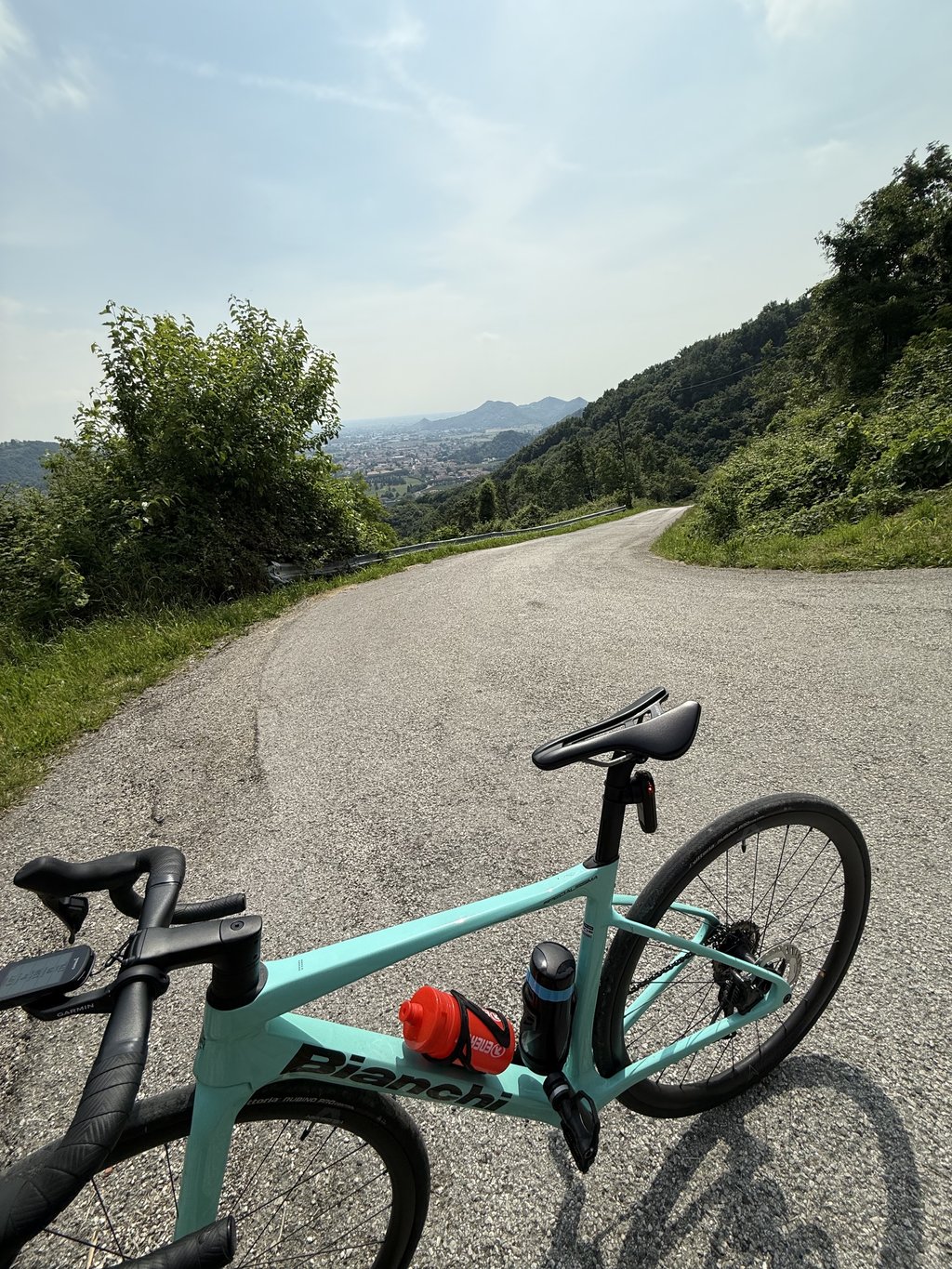
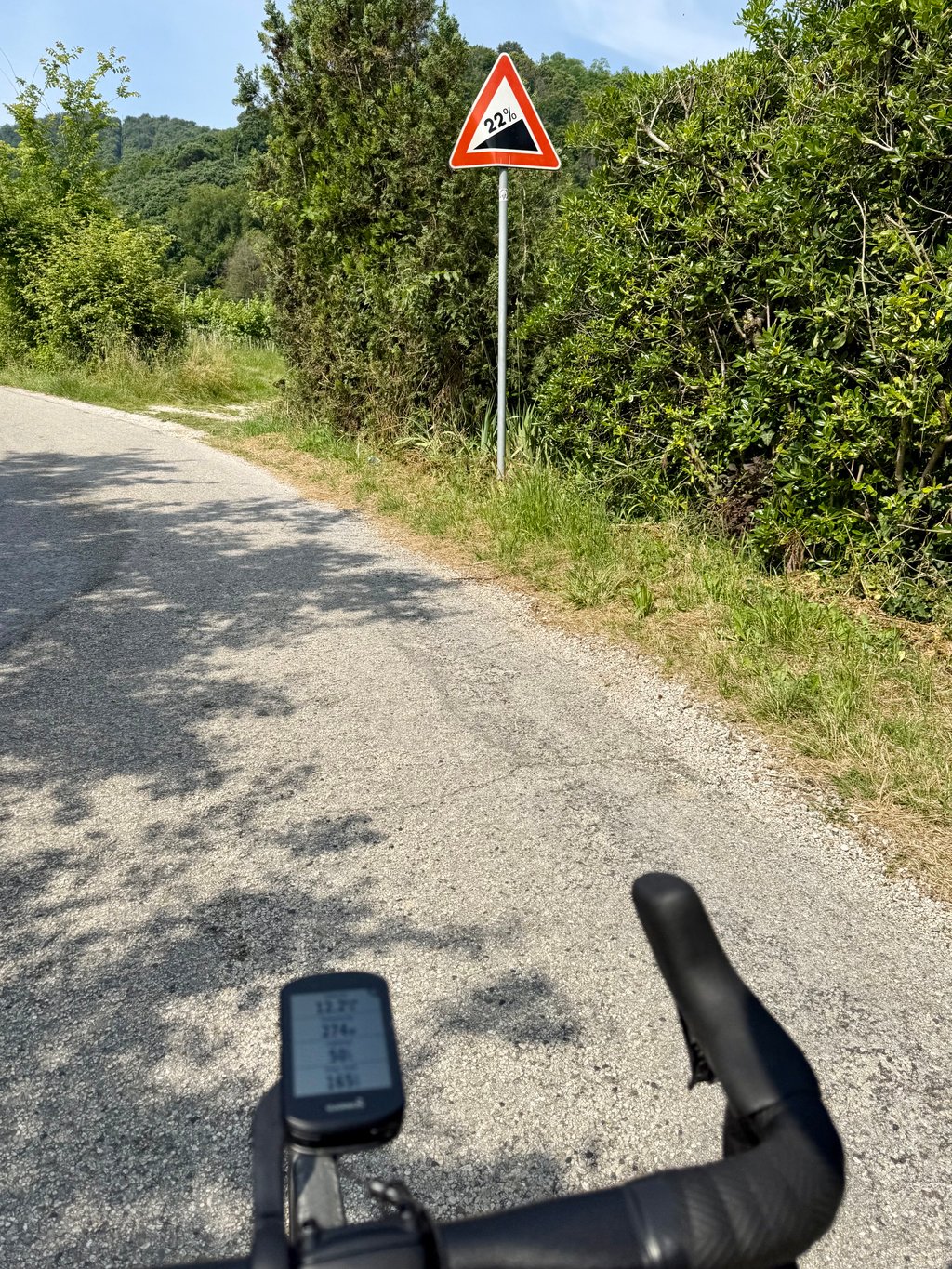
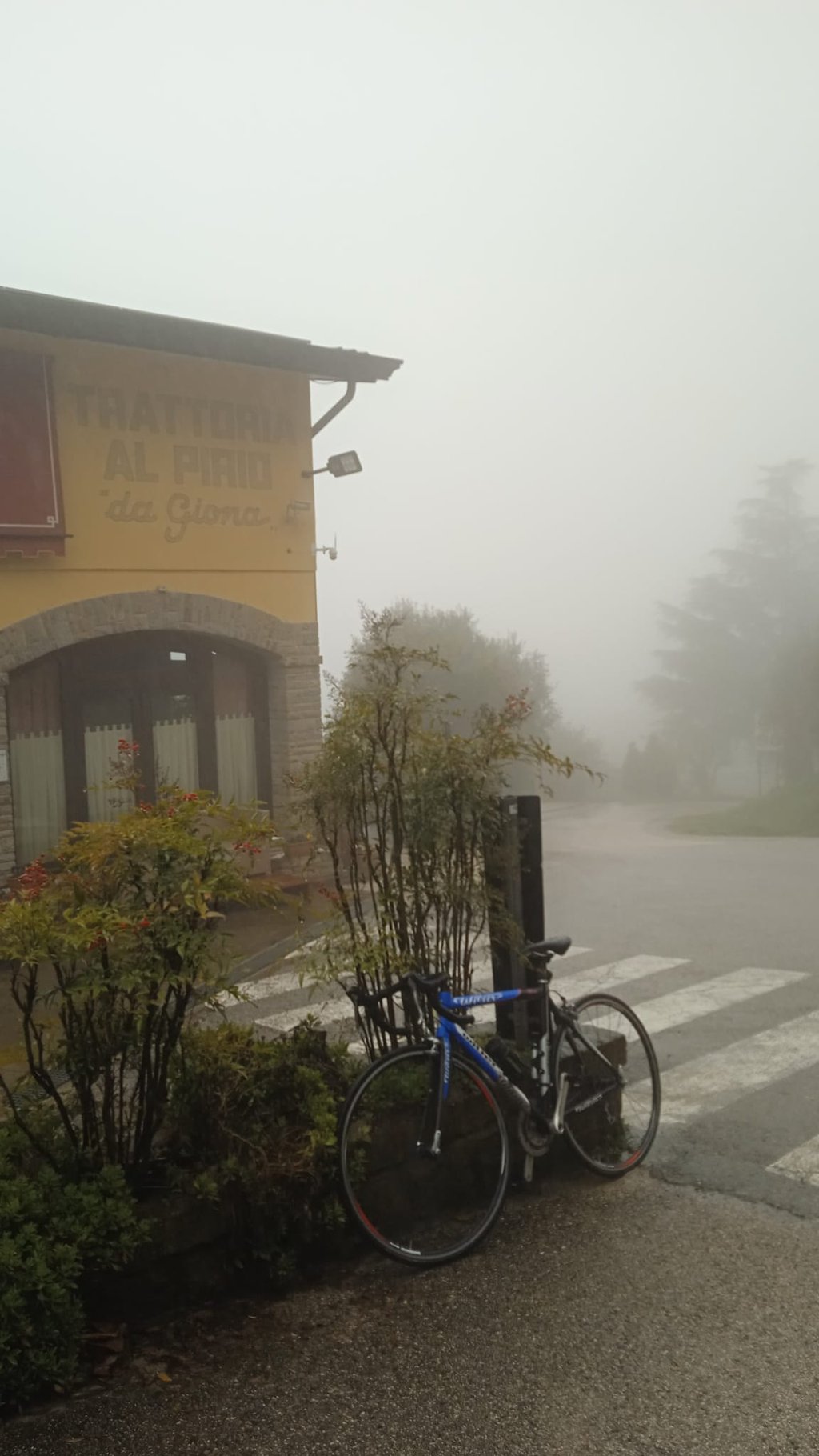
Monte Pirio from Luvigliano is a climb in the region Padua. It is 0.9 mi long and bridges 627 ft of vertical ascent with an average gradient of 12.7%, resulting in a difficulty score of 262. The top of the ascent is located at 719 ft above sea level. Climbfinder users shared 1 review/story of this climb and uploaded 7 photos.
Road name: Via Cesare Pollini
4.0 by David_BianucciThis is an automatic translation, the original language is: Italian.The climb is taken from the SP 98 road that connects Torreglia and Luvigliano (we are in this second hamlet). This is a very interesting area due to the proximity of Villa dei vescovi and the municipality of Torreglia. Fortunately, the ascent is short (only one and a half kilometres), because apart from the first three hundred metres and the last hundred, the gradient never drops below more than considerable levels, and on several occasions forces one to reckon with hard stretches close to 20%... read more
Welcome! Please activate your account if you would like to share something. Look for the verification email in your inbox.
If you want to upload your photos, you need to create an account. It only takes 1 minute and it's completely free.
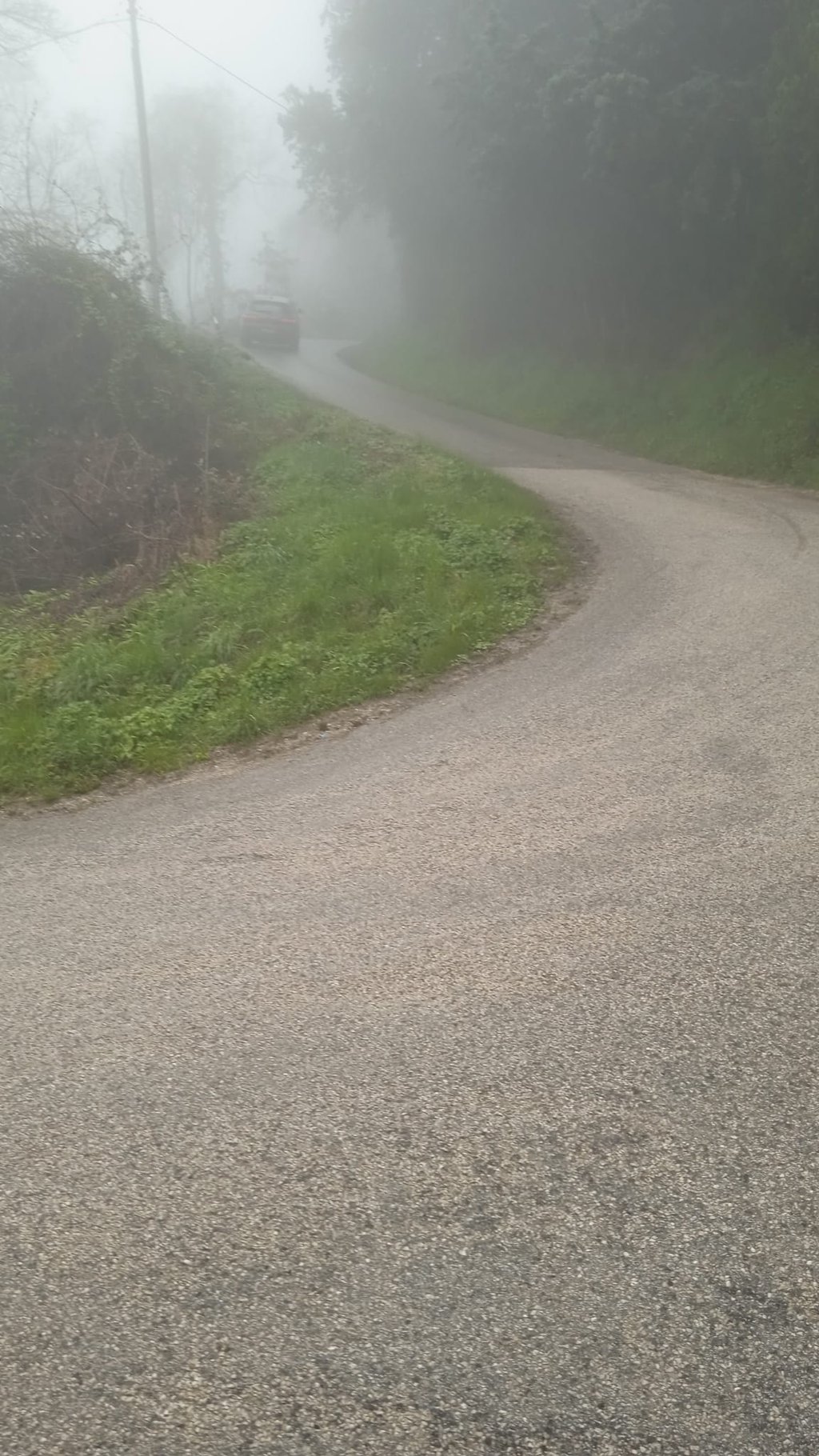
The climb is taken from the SP 98 road that connects Torreglia and Luvigliano (we are in this second hamlet). This is a very interesting area due to the proximity of Villa dei vescovi and the municipality of Torreglia. Fortunately, the ascent is short (only one and a half kilometres), because apart from the first three hundred metres and the last hundred, the gradient never drops below more than considerable levels, and on several occasions forces one to reckon with hard stretches close to 20%, without, however, presenting any resting segments. The central nine hundred metres "have an average gradient that I would estimate at around 16%, and this says it all about the hardness of the climb. In particular, a great deal of patience and concentration (as well as strength) is required to negotiate the hairpin bends, which if taken on the outer side, when traffic allows, are certainly more surmountable than on the inner side.
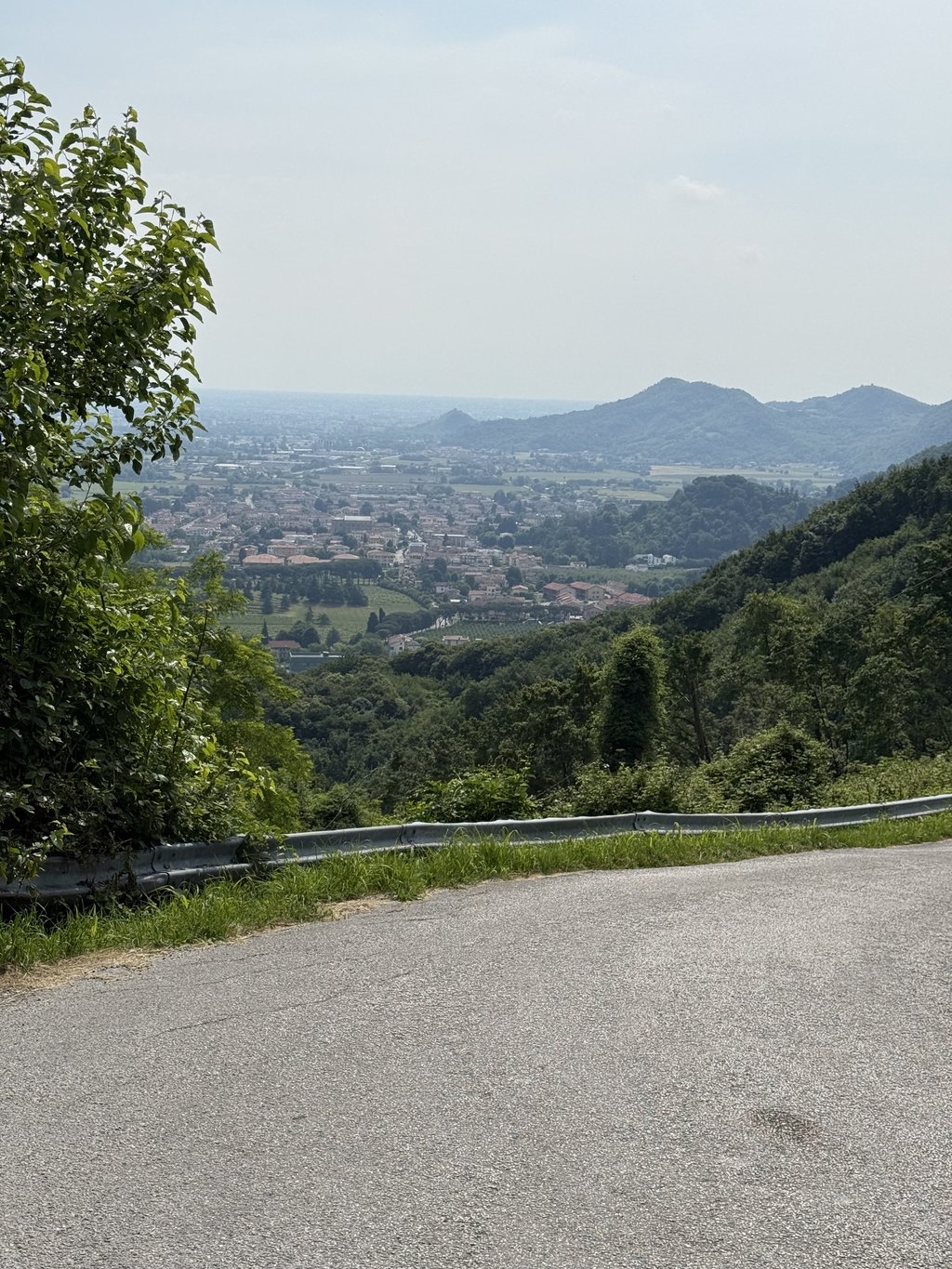
The asphalt is not continuous but neither is it one of the shabbiest. The panorama closes in between the trees on the hardest part of the climb, but otherwise provides beautiful views of the surrounding hills.
The descent is among the most dangerous to be found on the Euganean Hills. The gradient, the narrowness of the road and the presence of blind hairpin bends force you to constantly apply the brakes. With wet asphalt it is particularly necessary to descend at a very low speed if you do not want to risk locking the rear wheel and real balancing manoeuvres to avoid ending up lying down.
All in all, a dry and very hard climb, perhaps the one among the Euganean Hills that requires the greatest gifts of pure strength to overcome.
La salita si prende dalla SP 98 che collega Torreglia e Luvigliano (siamo in questa seconda frazione). Si tratta di una zona molto interessante per la vicinanza di Villa dei vescovi e del comune di Torreglia. Fortunatamente l'ascesa è breve (solo un chilometro e mezzo), perchè esclusi i primi trecento metri e gli ultimi cento la pendenza non scende mai sotto livelli più che ragguardevoli, e costringe in più riprese a fare i conti con durissimi tratti prossimi al 20%, senza presentare peraltro segmenti di riposo. I novecento metri "centrali" presentano un pendenza media che stimerei intorno al 16%, e questo la dice tutta sulla durezza della salita. In particolare occorre molta pazienza e concentrazione (oltre che forza) per superare i tornanti, che se presi sul lato esterno, quando il traffico lo consente, sono sicuramente più accessibli che non dal lato interno.
L'asfalto non è continuo ma nemmeno tra i più malandati. Il panorama si chiude tra gli alberi nel tratto più duro dell'erta, per il resto fornisce belle viste sui colli circostanti.
La discesa è tra le più pericolose si trovino sugli Euganei. La pendenza, la strettezza della strada e la presenza di tornanti ciechi obbliga a tenere costantemente tirati i freni. Con asfalto bagnato occorre in particolare "calarsi" a velocità davvero basse, se non si vuole rischiare il blocco della ruota posteriore e manovre di vero e proprio equilibrismo per non finire sdraiati.
In definitiva una salita secca e durissima, forse quella che tra gli Euganei richiede le massime doti di forza pura per essere affrontata.
| 5 mph | 00:11:15 |
| 7 mph | 00:07:58 |
| 9 mph | 00:06:12 |
| 12 mph | 00:04:40 |
This page is better in the app